Final Call for papers
Final Call for Papers: The Seventh Workshop on Privacy in Natural Language Processing (PrivateNLP) co-located with ACL 2026, San Diego, July 2-7, 2026
Submission deadline extension
Website: https://sites.google.com/view/privatenlp2026/
PrivateNLP invites quality research contributions in different formats:
Original research papers (long and short)
Position and opinion papers
All submissions will undergo a double-blind review process, and accepted submissions will be presented at the workshop.
Topics of interest include but are not limited to:
Privacy preserving machine learning for language models
Generating privacy preserving test sets
Data extraction attacks on NLP systems (e.g. membership inference attacks)
Differential privacy for NLP models and data
Generating Differentially private derived data
NLP, privacy and regulatory compliance
Private Generative Adversarial Networks
Privacy in Active Learning and Crowdsourcing
Privacy and Federated Learning in NLP
User perceptions on privatized personal data
Auditing provenance in language models
Continual learning under privacy constraints
NLP for studying privacy policies and other texts about privacy
Ethical ramifications of AI/NLP in support of usable privacy
Homomorphic encryption for language models
Machine unlearning methods for language models
Auditing privacy-preserving methods applied to NLP models and data
Memorization of private information by language models
Important Dates
Submission deadline: Extended to March 19, 2026
Fast-track submission deadline: March 24, 2026
Acceptance notification: April 28, 2026
Camera-ready versions: May 12, 2026
Submission deadline for presenting findings papers: May 28, 2026
Workshop: July 2 or 3, 2026
All deadlines 23:59 Anywhere on Earth
Submission Instructions
Two types of submissions are invited: full papers and short papers. Please follow the ACL submission policies.
Full papers should not exceed eight (8) pages of text, plus unlimited references. Final versions of full papers will be given one additional page of content (up to 9 pages) so that reviewers' comments can be taken into account.
Short papers may consist of up to four (4) pages of content, plus unlimited references. Upon acceptance, short papers will still be given up to five (5) content pages in the proceedings.
We also ask authors to include a limitation section and broader impact statement, following guidelines from the main conference.
We will be using OpenReview for submissions:
https://openreview.net/group?id=aclweb.org/ACL/2026/Workshop/PrivateNLP
Please note OpenReview's moderation policy for newly created profiles:
New profiles created without an institutional email will go through a moderation process that can take up to two weeks.
New profiles created with an institutional email will be activated automatically.
No anonymity period will be required for papers submitted to the workshop, per the latest updates to the ACL anonymity policy. However, submissions must still remain fully anonymized.
Fast-Track Submission
If your paper has been reviewed by ACL, EMNLP, EACL, or ARR and the average rating is higher than 2.5 (either average soundness or excitement score), the paper is qualified to be submitted to the fast-track. In the appendix, please include the reviews and a short statement discussing what parts of the paper have been revised.
Link to fast-track submissions: Link TBD
Please upload the following 3 documents in a single ZIP file:
ARR reviews (including discussions and the meta-review) as a single PDF (e.g. printing the review webpage to PDF)
The submitted anonymous paper as PDF
A plain text file with the corresponding author's name and contact email
Dual Submission Policy
In addition to previously unpublished work, we invite papers on relevant topics which have been submitted to alternative venues (such as other NLP or ML conferences). Please follow the double-submission policy from ACL. Accepted cross-submissions will be presented as posters, with an indication of the original venue. Selection of cross-submissions will be determined solely by the organizing committee.
Non-Archival Option
There are no formatting or page restrictions for non-archival submissions. The accepted papers to the non-archival track will be displayed on the workshop website, but will NOT be included in the workshop proceedings or otherwise archived.
Workshop organizers
Ivan Habernal (ruhr-uni-bochum.de)
Sepideh Ghanavati (maine.edu)
Sara Haghighi (maine.edu)
Krithika Ramesh (jhu.edu)
Timour Igamberdiev (univie.ac.at)
Shomir Wilson (psu.edu)
Contact
privatenlp26-orga(a)lists.ruhr-uni-bochum.de
Join us at the 48th European Conference on Information Retrieval (ECIR 2026), Europe's premier forum for research in Information Retrieval (IR). ECIR brings together researchers, practitioners, and industry experts to share new, unpublished, and innovative research that is shaping the future of IR.
29 March – 2 April 2026
Delft, The Netherlands
ECIR 2026 will take place as a fully in-person conference, fostering vibrant discussions and meaningful networking opportunities. The programme includes tutorials on Sunday, 29 March, the main conference from 30 March to 1 April, and a dedicated workshop day on Thursday, 2 April.
What to Expect at ECIR 2026
Multiple research tracks covering recent advances in Information Retrieval
Three distinguished keynote speakers offering inspiring insights
A dedicated Industry Day bridging research and real-world innovation
Workshops, tutorials, posters, and rich networking opportunities
A welcoming environment with a strong tradition of supporting early-career researchers, including postgraduate students and postdoctoral fellows
Whether you are presenting new research, engaging in thought-provoking discussions, or connecting with leading experts in academia and industry, ECIR 2026 promises an inspiring and dynamic experience.
Explore the full program schedule:
https://ecir2026.eu/programme/program-schedule
Learn more about the conference, tracks, keynote speakers, and Industry Day:
https://ecir2026.eu/
Register now to secure your place:
https://ecir2026.dryfta.com/registration-page
We look forward to welcoming you to Delft as we explore the latest advancements and challenges in Information Retrieval at ECIR 2026!
Colleagues,
I have updated the corpuslab.com website with a simple concordance/collocation interface. You can search IMRDC sections of research articles in Arts, Economics, Engineering, Psychology and Social Science. It is not heavy-duty text analysis; you get 100 hits. You can sort by clicking the left or right context and you can highlight hedges, boosters, connectives, and reporting verbs. It is meant to be a gentle introduction to text analysis, an aid to student writers.
There are also details of quite advanced disciplinary writing books written by me and Claude. As noted in those, many disciplines don’t follow the IMRDC structure, but use alternative labels or thematic headings. I am assuming, in the concordance search described above, the language features found in the Method section will still be present in articles that use an alternative heading, such as Experiment 1. I should perhaps add some explicit statement about the typical macrostructure found in these disciplines.
Let me know if you have any questions, find any problems etc.
Michael
---
Michael Barlow. www.michaelbarlow.com<http://www.michaelbarlow.com/>
Assoc. Prof. Applied Linguistics, University of Auckland
Recent publications
M. Barlow. 2026. Writing the Social Science Research Article.<https://www.amazon.com/dp/0940753367/ref=sr_1_1_so_ABIS_BOOK?crid=25EQBROGY…> Athelstan.
M. Barlow. 2026. Writing the Humanities Research Article.<https://www.amazon.com/s?k=writing+the+humanities+research+article&i=stripb…> Athelstan.
M.Barlow. 2026. Writing the Business Research Article<https://www.amazon.com/dp/0940753405/ref=sr_1_2?crid=2XO1YCSNL8ZT&dib=eyJ2I…>.<https://www.amazon.com/dp/0940753405/ref=sr_1_2?crid=2XO1YCSNL8ZT&dib=eyJ2I…> Athelstan
M.Barlow. 2026. Writing the Economics Research Article<https://www.amazon.com/dp/0940753383/ref=sr_1_1?crid=2XO1YCSNL8ZT&dib=eyJ2I…>. Athelstan
M. Barlow 2023. Ten Lectures on Corpora and Cognitive Linguistics<https://brill.com/display/title/61682>. Brill
Le, Pham & Barlow 2023. The Academic Discourse of Mechanical Engineering<https://benjamins.com/catalog/scl.107>. Benjamins
Dear colleagues,
We invite submissions to the First Workshop on Evaluating LLMs for Specialized Domains (Eval4SD), to be held co-located with KONVENS 2026 in Hamburg, Germany (September 14th - 17th).
The workshop focuses on the evaluation of large language models in specialized domains such as—but not limited to—law, medicine, science, finance, digital humanities, social sciences, education, and politics. In this space, we have identified three core areas detailed below: LLM Benchmarking, Domain Research Replication, and Evaluation Methodology. Work that fits within the general theme but not any of the focus areas is also welcome!
- **LLM Benchmarking:** We invite contributions that evaluate multiple models, datasets, inference methods, or prompting techniques on existing data or introduce novel, specialized benchmarking datasets. Papers in this direction may seek to answer questions like: ‘Which model should I use for my social science project?’ ‘Are open-weight models inferior for specialized tasks?’, or ‘Given a limited budget, what is my best choice of LLM for my digital humanities question?’ We especially encourage submissions that evaluate performance in low- and medium-resource languages.
- **Domain Research Replication:** Does information automatically extracted using a different model or a slightly altered approach still support the same domain conclusions? We invite submissions that attempt to replicate existing domain research using a tweaked LLM setup. For us, testing open-weight models is especially important in light of replicability. We are excited to see how robust domain research is to adaptations of the automation setups, from prompting to model weights and training data.
- **Metrics and Evaluation Methodology:** We invite submissions on methodology for assessing LLM outputs in complex tasks. This includes work on LLM judge setups or novel rule-based metrics for specialized tasks.
We allow submissions in two categories:
- **Long Papers (up to 8 pages + references):** Complete research contributions with novel findings, experimental results, and thorough analysis. Suitable for mature work on LLM evaluation methodology or new benchmark proposals.
- **Short & Position Papers (up to 4 pages + references):** Preliminary results, position papers, system descriptions, and focused contributions. Great for provocative arguments or narrowly scoped empirical studies.
Submissions follow the ACL template; reviews are double-blind and are conducted via OpenReview (https://openreview.net/group?id=GSCL.org/KONVENS/2026/Workshop/Eval4SD).
Additionally, we welcome non-archival submissions to present recently published work or seek feedback on work-in-progress without violating dual-submission policies. Accepted papers will be presented at the workshop, but will not be included in the official proceedings.
Important dates:
- Submission deadline: July 03, 2026 (23:59 CEST)
- Notification of acceptance: July 31, 2026
- Camera-ready deadline: August 15, 2026
- Workshop date: co-located with KONVENS (14th - 17th), exact day TBA
Website: https://eval4sd.github.io/
Contact: eval4sd-organizers(a)googlegroups.com
[Apologies for cross-postings]
Call for Papers
First International Workshop on Extraction from Triplet
Text-Table-Knowledge Graph and associated Challenge
https://ecladatta.github.io/triplet2026/
in conjunction with the 23rd European Semantic Web Conference (ESWC 2026)
https://2026.eswc-conferences.org/, Dubrovnik, Croatia
Important dates:
- **Submission deadline (extended)**: 13 March, 2026 (11:59pm, AoE)
- **Notifications**: 31 March, 2026
- **Challenge registration deadline**: 15 March, 2026
- **Challenge results submission**: 10 April, 2026
- **Camera-ready deadline**: 15 April, 2026 (11:59pm, AoE)
- **Workshop**: Sunday 10 May OR Monday 11 May 2026
Motivation:
Understanding information spread across text and table is essential for
tasks such as question answering and fact checking. Existing benchmarks
primarily deal with semantic table interpretation or reasoning over
tables for question answering, leaving a gap in evaluating models that
integrate tabular and textual information, perform joint information
extraction across modalities, or can automatically detect
inconsistencies between modalities.
This workshop aims to provide a forum for exchanging ideas between the
NLP community working on open information extraction and the vibrant
Semantic Web community working on the core challenge of matching tabular
data to Knowledge Graphs, on populating knowledge graphs using texts and
on reasoning across text, tabular data and knowledge graphs. The
workshop also targets researchers focusing on the intersection of
learning over structured data and information retrieval, for example, in
retrieval augmented generation (RAG) and question answering (QA)
systems. Hence, the goal of the workshop is to connect researchers and
trigger collaboration opportunities by bringing together views from the
Semantic Web, NLP, database, and IR disciplines.
Scope:
The topics of interest include but are not limited to:
- Semantic Table Interpretation
- Automated Tabular Data Understanding
- Using Large Language Models (LLMs) for Information Extraction
- Generative Models and LLMs for Structured Data
- Knowledge Graph Construction and Completion with Tabular Data and Texts
- Analysis of Tabular Data on the Web (Web Tables)
- Benchmarking and Evaluation Frameworks for Joint Text-Table Data Analysis
- Applications (e.g. data search, fact-checking, Question-Answering, KG
alignment)
Submission Guidelines:
We invite two types of submissions:
1. Full research papers (12-15 pages) including references and appendices
2. Challenge papers (6-8 pages) including references and appendices
All submissions should be formatted in the CEUR layout format,
https://www.overleaf.com/latex/templates/template-for-submissions-to-ceur-w…
This workshop is double-blind and non-archival. Submissions are managed
through EasyChair at
https://easychair.org/conferences/?conf=triplet2026. All accepted papers
will be presented as posters or as oral talks.
**TRIPLET Challenge:**
In recent years, the research community has shown increasing interest in
the joint understanding of text and tabular data, often, for performing
tasks such as question answering or fact checking where evidences can be
found in texts and tables. Hence, various benchmarks have been developed
for jointly querying tabular data and textual documents in domains such
as finance, scientific publications, and open domain. While benchmarks
for triple extraction from text for Knowledge Graph construction and
semantic annotation of tabular data exist in the community, there
remains a gap in benchmarks and tasks that specifically address the
joint extraction of triples from text and tables by leveraging
complementary clues across these different modalities.
The TRIPLET 2026 challenge is proposing three sub-tasks and benchmarks
for understanding the complementarity between tables, texts, and
knowledge graphs, and in particular to propose a joint knowledge
extraction and reconciliation process.
#Sub-Task 1: Assessing the Relatedness Between Tables and Textual Passages
The goal of this task is to assess the relatedness between tables and
textual passages (within documents and across documents). For this
purpose, we have constructed LATTE (Linking Across Table and Text for
Relatedness Evaluation), a human annotated dataset comprising table–text
pairs with relatedness labels. LATTE consists of 7,674 unique tables and
41,880 unique textual paragraphs originating from 3,826 distinct
Wikipedia pages. Each text paragraph is drawn from the same or
contextually linked pages as the corresponding table, rather than being
artificially generated. LATTE provides a challenging benchmark for
cross-modal reasoning by requiring classification of related and
unrelated table–text pairs. Unlike prior resources centered on
table-to-text generation or text retrieval, LATTE emphasizes
fine-grained semantic relatedness between structured and unstructured data.
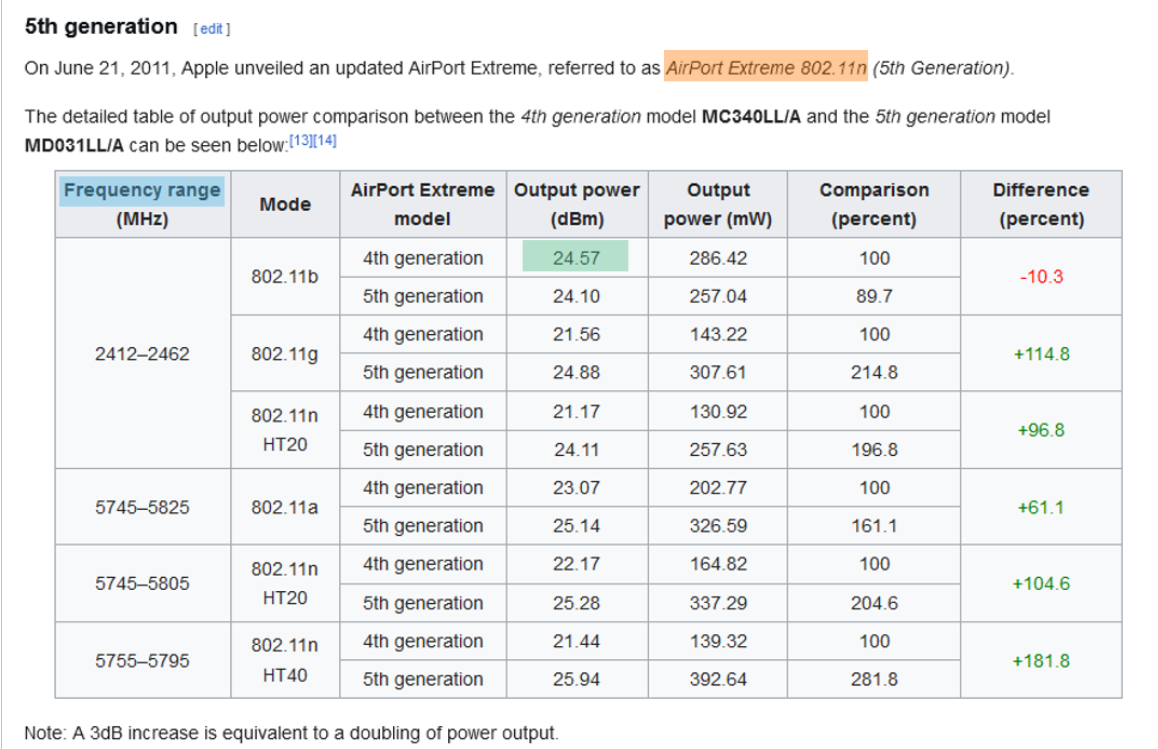
The Figure below provides an example, using a web-annotation tool we
developed, of how we identify the relatedness between the sentence
containing the entity AirPort Extreme 802.11n (highlighted in Orange)
and the data table providing information about output power and
frequency for this entity. Participants are provided with tables and
textual passages that would need to be ranked. The evaluation will use
metrics such as P@k, R@k and F1@k.
Go to https://www.codabench.org/competitions/12776/ and enroll to
participate in this Task.
#Sub-Task 2: Joint Relation Extraction Between Texts and Tables
The goal of this task is to automatically extract knowledge jointly from
tables and related texts. For this purpose, we created ReTaT, a dataset
that can be used to train and evaluate systems for extracting such
relations. This dataset is composed of (table, surrounding text) pairs
extracted from Wikipedia pages and has been manually annotated with
relation triples. ReTaT is organized in three subsets with distinct
characteristics: domain (business, telecommunication and female
celebrities), size (from 50 to 255 pairs), language (English vs French),
type of relations (data vs object properties), close vs open list of
relation, size of the surrounding text (paragraph vs full page). We then
assessed its quality and suitability for the joint table-text relation
extraction task using Large Language Models (LLMs).
Given a Wikipedia page containing texts and tables and a list of
predicates defined in Wikidata, a participant system should extract
triples composed of mentions located partly in the text and partly in
the table and disambiguated with entities and predicates identified in
the Wikidata reference knowledge graph. For example, in the Figure
below, an annotation triple <Q13567390, P2109, 24.57> is associated with
mentions highlighted in orange (subject), blue (predicate) and green
(object) to annotate the document available at
https://en.wikipedia.org/wiki/AirPort_Extreme. Similar to the
Text2KGBench evaluation
(https://link.springer.com/chapter/10.1007/978-3-031-47243-5_14), and
because the set of triples are not exhaustive for a given sentence, to
avoid false negatives, we follow a locally closed approach by only
considering the relations that are part of the ground truth. The
evaluation then uses metrics such as P, R and F1.
Go to https://www.codabench.org/competitions/12936/ and enroll to
participate in this Task.
# Sub-Task 3: Detecting Inconsistencies Between Texts, Tables and
Knowledge Graphs
The goal of this task is to check the consistency of knowledge extracted
from tables and texts with existing triples in the Wikidata knowledge
graph. Different kind of inconsistencies will be considered in this
task. Participants to this task will be able to report on their findings
in their system paper.
See the Figure at
https://ecladatta.github.io/images/triplet_annotation_tool.png
# Data & Evaluation:
For the first 2 sub-tasks, we have released a training dataset with
ground-truth annotations, enabling participant teams to develop machine
learning-based systems, and in particular for training purposes and for
hyperparameter optimizations and internal validations.
A separate blind test dataset will remain private and be used for
ranking the submissions.
Participants should register on Codabench and then enroll for each
sub-task separately (Task 1:
https://www.codabench.org/competitions/12776/ and Task 2:
https://www.codabench.org/competitions/12936/). Each team are allowed a
limited number of daily submissions, and the highest achieved accuracy
will be reported as the team's final result. We encourage participants
to develop open-source solutions, to utilise and fine-tune pre-trained
language models and to experiment with LLMs of various size in zero-shot
or few-shot settings.
# Challenge Important Dates:
- Release of training set: 13 February 2026
- Deadline for registering to the challenge: 15 March 2026
- Release of test set: 24 March 2026
- Submission of results: 10 April 2026
- System Results & Notification of Acceptance: 17 April 2026
- Submission of System Papers: 28 April 2026
- Presentations @ TRIPLET Workshop: May 2026
Workshop Organizers
- Raphael Troncy (EURECOM, France)
- Yoan Chabot (Orange, France)
- Véronique Moriceau (IRIT, France)
- Nathalie Aussenac-Gilles (IRIT, France)
- Mouna Kamel(IRIT, France)
Contact:
For discussions, please use our Google Group,
https://groups.google.com/g/triplet-challenge
The workshop is supported by the ECLADATTA project funded by the French
National Funding Agency ANR under the grant ANR-22-CE23-0020.
--
Raphaël Troncy
EURECOM, Campus SophiaTech
Data Science Department
450 route des Chappes, 06410 Biot, France.
e-mail: raphael.troncy(a)eurecom.fr & raphael.troncy(a)gmail.com
Tel: +33 (0)4 - 9300 8242
Fax: +33 (0)4 - 9000 8200
Web: http://www.eurecom.fr/~troncy/
Call for papers - Workshop on New Trends in Automatized Language Assessment (TALA)
The Workshop on New Trends in Automatized Language Assessment (TALA) will take place on 7 April 2026 in Louvain-la-Neuve, Belgium, and online (hybrid event). This meeting aims to provide an overview of various recent approaches of automatized language assessment and to offer researchers, academics and (PhD) students an excellent opportunity to share and discuss recent trends and cutting-edge methods on language assessment-related research.
In particular, the workshop will focus on proficiency assessment by mainly targeting automatic readability assessment (ARA) and automated essay scoring (AES).
Automatic readability assessment constitutes an interdisciplinary field of research concerned with the linguistic, cognitive, and typographic factors that influence the ease with which a text can be read and understood by different audiences. It is gaining increasing importance across a wide range of domains, including education, institutional communication, digital accessibility, and automated assessment of language proficiency. It has been an active field within natural language processing since the beginning of the 21st century.
Automated essay scoring aims to analyze written productions in order to generate an evaluation of writers’ competence in a specific field. For language-oriented AES, it is the written linguistic skills that are targeted. This task is particularly critical in language assessment contexts, but it can also support learning processes and the generation of formative feedback.
The workshop will include an invited speaker talk and some presentations based on abstract selection.
Invited speaker:
Rodrigo Wilkens (University of Exeter) is a specialist in computational readability modeling and automated essay scoring. His research focuses on multilingual proficiency assessment, linguistic feature modeling, and the use of large language models for educational applications. He has contributed to the development and evaluation of ARA and AES systems, with particular emphasis on non-English languages. His recent work explores the representational capacity of transformer models for proficiency prediction, interpretability in automated assessment, and readability-guided text generation.
We welcome abstracts addressing literature review, research results, ongoing research or negative results on the topics related to the main theme, with particular interest in the following subfields:
· AI and LLM-based approaches to automated language assessment, especially AES and ARA
· Computational and linguistic modeling of readability and writing proficiency
· Evaluation methodologies, validation frameworks, and interpretability in automated assessment
· Multilingual and non-English language assessment
· Corpus creation, annotation schemes, and new benchmark tasks
· Fairness, bias, and ethical considerations in automated assessment
· Theoretical perspectives linking linguistic features and proficiency modeling
· Critical reviews and meta-analyses in ARA/AES research
Submission format: Abstracts may be submitted in French or English and should be between 300 and 500 words. Authors are encouraged to include a short list of relevant references, which will not count toward the word limit. Abstracts should be anonymized for review. Author names and affiliations must be provided separately in the submission form. Submissions must be made via the online form available at: https://forms.gle/w1L6JNx8YAEgtswB7.
Please note that no proceedings will be later organized, as this workshop aims to foster scientific exchanges above all.
Important dates:
Abstract deadline: 20 March
Acceptance notification: 1st of April
Workshop: 7 April
Organizing Committee:
Prof. Thomas François, Prof. Rodrigo Wilkens, Dr. Eleonora Guzzi, Lingyun Gao, Amandine Pay, Elodie Vanzeveren, Romane Werner.
(Apologies for cross-postings)
�
*** The GUM Corpus - Release 12.0.0 ***
*** Georgetown University Multilayer corpus ***
�
The Corpling Lab <https://gucorpling.org/corpling/> at Georgetown University is happy to announce the first release of series 12 of the Georgetown University Multilayer corpus (GUM V12.0.0):
�
https://gucorpling.org/gum/
�
New in this version:
�
* New documents – the corpus now contains 291,056 tokens
* Completely reworked GUMBridge annotation scheme for bridging anaphora (work led by Lauren Levine):
* Manual re-annotation effort of the entire corpus
* Much more densely and consistently annotated using new guidelines
* 11 subtypes of bridging anaphora
* Multiple concurrent bridging subtypes are now possible
�
GUM is an open source corpus of richly annotated English texts from 24 genres:
�
* Main genres: (available in train/dev/test)
* academic writing
* biographies
* courtroom transcripts
* essays
* fiction
* how-to guides
* interviews
* letters
* news
* online forum discussions
* podcasts
* political speeches
* spontaneous face to face conversations
* textbooks
* travel guides
* vlogs
�
* Out-of-domain test genres: (test2, aka GENTLE partition):
* dictionary entries
* live esports commentary
* legal documents
* medical notes
* poetry
* mathematical proofs
* course syllabuses
* threat letters
�
The corpus is created by students as part of the Computational Linguistics curriculum at Georgetown University and is available under Creative Commons licenses.
�
This is the first version of GUM series 12, containing 301 documents annotated for:
�
* Multiple POS tags (100% manual gold PTB, extended PTB, converted CLAWS5 and UPOS) and UD morphological features
* Manually corrected lemmatization and morphological segmentation
* Sentence segmentation and rough speech act (manual)
* Document structure using TEI tags (paragraphs, headings, figures, captions etc., all manual)
* Constituent and dependency syntax (manually corrected Universal Dependencies, and PTB parses from gold tags with function labels and enhanced dependencies)
* Construction Grammar annotations following UCxn
* Information status (given-active/inactive, accessible-inferable/common ground/aggregate, and new)
* Entity type, graded salience (0-5) and coreference annotation (including non-named entities, singletons, appositions, cataphora and discourse deixis), as well as Centering Theory annotations
* Bridging anaphora classified into 11 subtypes (multiple concurrent types are possible)
* Entity linking (Wikification) of all named entities with Wikipedia articles and Wikidata, including their non-named and pronominal mentions
* Discourse parses in enhanced Rhetorical Structure Theory (eRST) and discourse dependencies, including multiple concurrent and non-projective relations
* Discourse signal annotations classified into 9 major and 46 minor types indicating how the presence of a relation is marked (based on the Signaling Corpus scheme)
* Shallow discourse relations following the PDTB v3 scheme
* Five abstractive summaries for each document following strict, comparable guidelines across genres
�
Note on Reddit data: token text is not contained in the release but can be downloaded with an included script.
�
For more information and to search or download the corpus online, see the corpus website <https://gucorpling.org/gum/> .
�
Best wishes,
The GUM team
�
PS – if you like GUM, also check out our automatically annotated AMALGUM <https://github.com/gucorpling/amalgum/> corpus!
�
Call for Papers: ArgMining 2026 – Workshop on Argument Mining
The Workshop on Argument Mining (ArgMining) provides a regular forum for presenting and discussing cutting-edge research in argument mining (a.k.a. argumentation mining) for academic and industry researchers. Continuing a series of twelve successful previous workshops, the 2026 edition welcomes submissions of long papers, short papers, extended abstracts, and PhD proposals.
Workshop Theme
The 2026 edition of ArgMining places a special focus on understanding and evaluating arguments in both human and machine reasoning. With this theme, we broaden the workshop’s scope to include reasoning—a long-standing area of AI research that has recently gained renewed interest within the ACL community, driven by the latest generation of large language models (LLMs).
Reasoning is tightly connected to argumentation, as it represents, analyzes, and evaluates the process of reaching conclusions based on available information. Viewing argumentation as a paradigm for capturing reasoning enables the evaluation of machines (particularly LLMs) based on their ability to address argument mining tasks.
Topics of Interest
Topics include, but are not limited to:
* Automatic extraction of textual patterns describing argument components in human and machine argumentation
* Cross-lingual, cross-cultural, and multi-perspective argument mining and reasoning
* Argument mining and generation from multimodal and/or multilingual data
* Explainability in argument mining through reasoning
* Modeling, assessing, and critically reflecting on the argumentation capabilities of LLMs
* Novel benchmarks in argument mining addressing recent developments in LLM reasoning
* Guidelines for assessing and documenting reasoning processes reflected in benchmarks
* Annotation guidelines, linguistic analysis, and argumentation corpora
* Real-world applications (e.g., social sciences, education, law, scientific writing; misinformation detection)
* Integration of commonsense and domain knowledge into argumentation models
* Combining information retrieval with argument mining (e.g., argumentative search engines)
* Ethical aspects and societal impact of argument mining and LLM reasoning
Submissions from all application areas are welcome.
Submission Types
The workshop accepts the following submission types:
* Long Papers (archival)
* Short Papers (archival)
* Extended Abstracts (non-archival)
* PhD Proposals (non-archival)
Accepted contributions will be presented as oral or poster presentations.
Archival Submissions
* Long papers:
* Substantial, original, completed, and unpublished work
* Up to 8 pages (excluding references)
* Unlimited references
* Up to 2 appendix pages
* 1 additional page in the final version for reviewer comments
* Short papers:
* Original, unpublished work with a focused contribution
* Not shortened versions of long papers
* Up to 4 pages (excluding references)
* Unlimited references
* Up to 1 appendix page
* 1 additional page in the final version for reviewer comments
Non-Archival Submissions
* Extended abstracts:
* Up to 2 pages including references
* 1 additional appendix page for tables/figures
* Selection based on workshop fit and the special theme
* Priority given to abstracts with doctoral students as first authors unable to present at *CL conferences due to visa restrictions
* PhD proposals:
* Up to 4 pages
* Description of PhD project, research challenges, contributions, and future directions
* Presented in a dedicated poster session for feedback and discussion
Multiple Submissions Policy
ArgMining 2026 will not consider papers simultaneously under review elsewhere. Submissions overlapping significantly (>25%) with active ARR submissions will not be accepted. ARR-reviewed papers are allowed if reviews and meta-reviews are available by the ARR commitment deadline.
Submission Format
* Two-column ACL 2026 format
* LaTeX or Microsoft Word templates
* PDF submissions only
* Submissions via OpenReview
Important Dates
* Direct paper submission deadline (archival): March 5, 2026
* ARR commitment deadline (archival): March 24, 2026
* Direct paper submission deadline (non-archival): April 7, 2026
* Notification of acceptance: April 28, 2026
* Camera-ready deadline: May 12, 2026
* Workshop dates: July 2–3, 2026
Review Policy
Long and short papers will follow ACL double-blind review policies. Submissions must be anonymized, including self-references and links. Papers violating anonymity requirements will be rejected without review. Demo descriptions are exempt from anonymization.
Best Paper Award
ArgMining 2026 will present a Best Paper Award to recognize significant contributions to argument mining research. All accepted papers are eligible.
Contact and Information
Website: https://argminingorg.github.io/2026/
Email: argmining.org [at] gmail.com
Workshop Organizers
Mohamed Elaraby (University of Pittsburgh)
Annette Hautli-Janisz (University of Passau)
John Lawrence (University of Dundee)
Elena Musi (University of Liverpool)
Julia Romberg (GESIS Leibniz Institute for the Social Sciences)
Federico Ruggeri (University of Bologna)
International Conference 'New Trends in Translation and Interpreting
Technology' (NeTTIT'2026)
Dubrovnik, Croatia, 24-27 June 2026
Fifth Call for Papers
# The conference
The third edition of the International Conference 'New Trends in
Translation and Interpreting Technology' (NeTTIT'2026) will take place
in Dubrovnik, Croatia from 24 to 27 June 2026.
The objective of the conference is (i) to bridge the gap between
academia and industry in the field of translation and interpreting by
bringing together academics in linguistics, translation and interpreting
studies, machine translation and natural language processing,
developers, practitioners, language service providers and vendors who
work on or are interested in different aspects of technology for
translation and interpreting, and (ii) to be a distinctive event for
discussing the latest developments and practices. NeTTIT'2026 invites
all professionals who would like to learn about the new trends, present
the latest work or/and share their experience in the field, and who
would like to establish business and research contacts, collaborations
and new ventures.
The conference will include plenary presentations (research and user
presentations, keynote speeches), poster sessions and panel discussions.
All submitted papers will be peer-reviewed by experts, and the accepted
papers will be published as open-access conference e- proceedings which
will be available at the time of the conference.
# Conference topics
Contributions are invited on any topic related to latest technology and
practices in translation, subtitling, localisation, interpreting,
machine translation and Large Language Models used in translation and
interpreting.
NeTTIT'2026 will feature a Special Theme Track "Future of Translation
and Interpreting Technologies in the Era of LLMs and Generative AI".
The conference topics include but are not limited to (see also the
special conference theme below):
## CAT tools
- Translation Memory (TM) systems
- NLP and MT for translation memory systems
- Terminology extraction tools
- Localisation tools
## Machine Translation
- Latest developments in Neural Machine Translation
- MT for under-resourced languages
- MT with low computing resources
- Multimodal MT
- Integration of MT in TM systems
- Resources for MT
## Technologies for MT deployment
- MT evaluation techniques, metrics and evaluation results
- Human evaluations of MT output
- Evaluating MT in a real-world setting
- Quality estimation for MT
- Domain adaptation
## Translation Studies
- Corpus-based studies applied to translation
- Corpora and resources for translation
- Translationese
- Cognitive effort and eye-tracking experiments in translation
## Interpreting studies
- Corpus-based studies applied to interpreting
- Corpora and resources for interpreting
- Interpretese
- Resources for interpreting and interpreting technology applications
- Cognitive effort and eye-tracking experiments in interpreting
## Interpreting technology
- Machine interpreting
- Computer-aided interpreting
- NLP for dialogue interpreting
- Development of NLP based applications for communication in public
service settings (healthcare, education, law, emergency services)
## Emerging Areas in Translation and Interpreting
- MT and translation tools for literary texts and creative texts
- MT for social media and real-time conversations
- Sign language recognition and translation
## Subtitling
- NLP and MT for subtitling
- Latest technology for subtitling
## User needs
- Analysis of translators' and interpreters' needs in terms of
translation and interpreting technology
- User requirements for interpreting and translation tools
- Incorporating human knowledge into translation and interpreting
technology
- What existing translators' (including subtitlers') and interpreters'
tools do not offer
- User requirements for electronic resources for translators and
interpreters
- Translation and interpreting workflows in larger organisations and the
tools for translation and interpreting employed
## The business of translation and interpreting
- Translation workflow and management
- Technology adoption by translators and industry
- Setting up translation /interpreting / language provider company
## Teaching translation and interpreting
- Teaching Machine Translation
- Teaching translation technology
- Teaching interpreting technology
- Latest AI developments in the syllabi of translation and interpreting
curricula
## Ethical issues in translation and technology
- Bias and fairness in MT
- Privacy and security in cloud MT systems
- Transparency and explainability of MT systems
- Environmental impact on MT systems
# Special Theme Track - Future of Translation and Interpreting
Technologies in the Era of LLMs and Generative AI
We are excited to share that NeTTIT'2026 will have a special theme with
the goal of stimulating discussion around Large Language Models,
Generative AI and the Future of Translation and Interpreting
Technologies. While the new generation of Large Language Models such as
CHATGPT, Gemini, Claude, DeepSeek and LLAMA showcase remarkable
advancements in language generation and understanding, we find ourselves
in uncharted territory when it comes to their performance on various
Translation and Interpreting Technology tasks with regards to fairness,
interpretability, ethics and transparency.
The theme track invites studies on how LLMs perform on Translation and
Interpreting Technology tasks and applications, and what this means for
the future of the field. The possible topics of discussion include (but
are not limited to) the following:
- Changes in (and the impact on) the translators and interpreters'
professions in the new AI era especially as a result of the latest
developments in LLMs and Generative AI
- Generative AI and translation
- Generative AI and interpreting
- Augmenting machine translation systems with generative AI
- Domain and terminology adaptation with Large Language Models
- Literary translation with Large Language Models
- Translation for low-resourced and minority languages with LLMs
- Improving Machine Translation Quality with Contextual Prompts in Large
Language Models
- Prompt engineering for translation
- Generative AI for professional translation
- Generative AI for professional interpreting
# Invited speakers
Yves Champollion, Wordfast LLC
Marko Grobelnik, Josef Stefan Institute
# Submissions and publication
NeTTIT'2026 invites the following types of submissions in English:
## Academic papers
- Regular long papers: These can be up to eight (8) pages long,
presenting substantial, original, completed, and unpublished work.
- Short papers: These can be up to four (4) pages long and are suitable
for describing small, focused contributions, work-in-progress, negative
results, system demonstrations, etc.
## User papers - for industry and practitioners. References to related
work are optional. Allowed paper length: between 2 and 4 pages.
Papers should be submitted through Softconf/START using the following
link: https://softconf.com/p/nettit2026/user/
For submitting the papers, we invite the authors to comply with the ACL
format using the templates available on the conference website. The
conference will not consider and evaluate abstracts only.
Further details on the submission procedure are available on the
conference website:
https://nettt-conference.com/2026/submissions-and-publication/
The accepted papers will be published in the conference e-proceedings
with assigned ISBN and DOI and made available online on the conference
website at the time of the conference. The conference organisers will
seek the inclusion of the conference proceedings in the ACL anthology.
# Important dates
- Submissions due: 23 March 2026
- Reviewing process: 25 March-25 April 2026
- Notification of acceptance: 28 April 2026
- Camera-ready due: 25 May 2026
- Conference camera-ready proceedings ready 15 June 2026
- Conference: 24-27 June 2026
# Pre-conference Tutorials
The pre-conference tutorials will include:
Post-editing and AI-augmented translation -
Marie Escribe (LanguageWire and Polytechnic University of Valencia)
Machine Translation Quality Evaluation -
Tharindu Ranasinghe (Lancaster University)
Automatic Speech Recognition as a supporting tool for interpreters -
Constantin Orasan (University of Surrey)
# Conference Chairs
- Gloria Corpas Pastor (University of Malaga)
- Ruslan Mitkov (Lancaster University and University of Alicante)
- Marko Tadic (University of Zagreb)
# Programme Committee Chairs
- Constantin Orasan (University of Surrey)
- Tharindu Ranasinghe (Lancaster University)
# Publication Chairs
- Marie Escribe (LanguageWire and Polytechnic University of Valencia)
- Alicia Picazo Izquierdo (University of Alicante)
# Organising Committee and Programme Committee coordination
* Marie Escribe (LanguageWire and Polytechnic University of Valencia)
* Alicia Picazo Izquierdo (University of Alicante)
* Xiaojing Zhao (Hong Kong Polytechnic University)
*
# Publicity and Sponsorship Chair
- Vilelmini Sosoni (Ionian University)
# Programme committee
For a list of the programme committee members visit:
https://nettt-conference.com/2026/programme-committee/
# Venue
The conference will take place at the Centre for Advanced Academic
Studies (CAAS) of the University of Zagreb (http://www.caas.unizg.hr/)
in Dubrovnik.
# Sponsor
Juremy.com
# Sponsorship opportunities
Companies working in the fields of translation technology, interpreting
technology and/or related fields, are welcome to familiarise themselves
with the sponsorship opportunities that the conference offers. Please
visit https://nettt-conference.com/2026/sponsors/ for more details.
# Further information and contact details
The conference website https://nettt-conference.com/ is updated on a
regular basis. For further information, please email
nettit2026(a)nettt-conference.com.
You can also follow us on social media for updates and announcements.
LinkedIn - https://www.linkedin.com/company/nettit2026/
Twitter/X - https://x.com/NeTTIT2026
--
Amal Haddad Haddad (She/her)
Facultad de Traducción e Interpretación
Universidad de Granada |https://www.ugr.es/personal/amal-haddad-haddad
Lexicon Research Group |http://lexicon.ugr.es/haddad
Co-Convenor, BAAL SIG 'Humans, Machines,
Language'|https://r.jyu.fi/humala
Event Coordinator, BAAL SIG 'Language, Learning and Teaching'
===============
Cláusula de Confidencialidad: "Este mensaje se dirige exclusivamente a
su destinatario y puede contener información privilegiada o
confidencial. Si no es Ud. el destinatario indicado, queda notificado de
que la utilización, divulgación o copia sin autorización está prohibida
en virtud de la legislación vigente. Si ha recibido este mensaje por
error, se ruega lo comunique inmediatamente por esta misma vía y proceda
a su destrucción.
This message is intended exclusively for its addressee and may contain
information that is CONFIDENTIAL and protected by professional
privilege. If you are not the intended recipient you are hereby notified
that any dissemination, copy or disclosure of this communication is
strictly prohibited by law. If this message has been received in error,
please immediately notify us via e-mail and delete it"
===============
Dear colleagues,
I would like to draw your attention to my recent book, Understanding Conversational AI: Philosophy, Ethics, and Social Impact of Large Language Models (Ubiquity Press, 270 pages).
The book is fully open access and can be downloaded either as a complete volume or chapter by chapter. A paperback edition is also available on demand.
It offers an interdisciplinary examination of large language models, focusing on how they reshape our understanding of language, cognition, and social practices. Engaging with philosophy of language, linguistics, cognitive science, and AI ethics, it analyzes how these systems generate meaning, simulate reasoning, and increasingly participate in activities such as translation, writing, and evaluation. It also addresses broader epistemic and political issues, including bias, misinformation, automation, and the transformation of professional and educational contexts.
The book is available here:
https://www.ubiquitypress.com/books/m/10.5334/bde
Please feel free to read and share it.
Best regards,
Thierry Poibeau